
Silk Road Journey: Map | China’s Wild West: Zhangye | Happy Underground Life: Jiayuguan | Library at the End of the World: Dunhuang
Listen to this story
Dunhuang is a tiny town (by Chinese standards) of merely about 125,000 people. It used to be even smaller, serving as the final Chinese mainland outpost on the Silk Road—a vast medieval highway linking the Chinese capital to anywhere in Europe. A century ago, it would take a traveller about four days of camel ride to reach this location in the heart of the Gobi desert from the nearest town.
THE ROAD
Now, Dunhuang (also known as Tun-huang and Touen-houang) is filled with tourists travelling along the modern Silk Road rather than camels. They take high-speed trains and SUVs to get here in huge numbers. The tourists flock to the local glossy bazaar in droves, bringing a busy, serious atmosphere reminiscent of a Chinese trade endeavour.
The enormous mounds of dried fruit in the bazaar remind me that Dunhuang is still Central Asia—at least geographically, though less so politically.
Dunhuang was always a true crossroads city. Tibetan Lhasa and Mongolian Ulaanbaatar are all about the same distance from here. The other two nearest capitals, Beijing and Almaty, are just about 1,000 kilometers further away. Somewhere not far, the great Gobi Desert meets the Taklamakan, another huge Central Asian sand desert.
Writer Peter Hopkirk called Dunhuang "one of the least-known of China's many wonders." Groundbreaking archaeologist Aurel Stein almost died trying to get here just a little more than a century ago. He was one of the first western scientists who reached the city, and the British King awarded him knighthood for that journey.
THE BAZAAR
This city bazaar is now officially called the Dunhuang Night Market. Its pace is more relaxed than that of the usually busy, crowded Chinese heartland cities, but more glossy than perhaps any Central Asian open-square trading place.
Signs across the food market feature Central Asian cities that are historically and culturally much closer to this place than Beijing: Bukhara, Samarkand, Khiva.
I leave the bazaar and enter the newly rebuilt city centre. It all feels as a typical provincial China: the hordes of scooter drivers, often carrying additional loads of children facing backwards, huge masses of people, the cult of food, everything cheap (I buy sneakers for $10, they would last for a season), disturbing smells, weird toilets and hotels, huge scale of everything, and the public that feels totally indifferent to you, the only foreign-looking face around.
BOOKS
The attention paid to books in Dunhuang is remarkable for this remote desert place. Books are sold in the bazaar and on the side streets. Even at the local airport, a huge bookstore featuring mostly academic works squeezes typical luxury brands.
I spend two hours with the owner of Mogao Bookstore, a recently opened spacious book establishment, which is also a cafe and even a bar, featuring some of the most trendy books published in Chinese over the last few years. The owner says he recently finished university and then worked a bit at a bookstore in a city known for its liberal attitudes.
He moved to Dunhuang to open his own bookstore. As it is near a night market, the store is open until 11 p.m. But only a few visitors come and go, buying just a thing or two. The business seems slow, while the competition is fierce, with about ten other bookstores nearby.
CAVED MONASTIC CITY
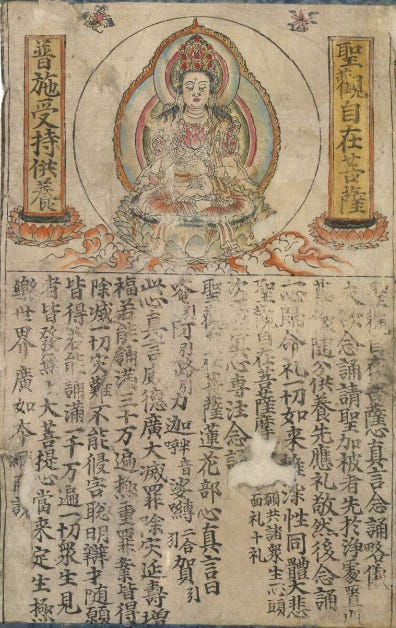
This affection for printed things is explained by something located just a few miles away. It is the Hidden Library found in a monastic city known as the Caves of the Thousand Buddhas, or the Mogao Caves. Here, the world’s oldest dated printed book, a Buddhist scripture called the Diamond Sutra, laid hidden for many centuries.
The Diamond Sutra was printed six centuries before the Gutenberg Bible, the first European printed book. Printed Buddhist bibles were certainly in demand in this major scholarly centre, a monastic city housing 18 monasteries. Hundreds of monks, along with countless artists and scholars, pursued Buddhist knowledge here.
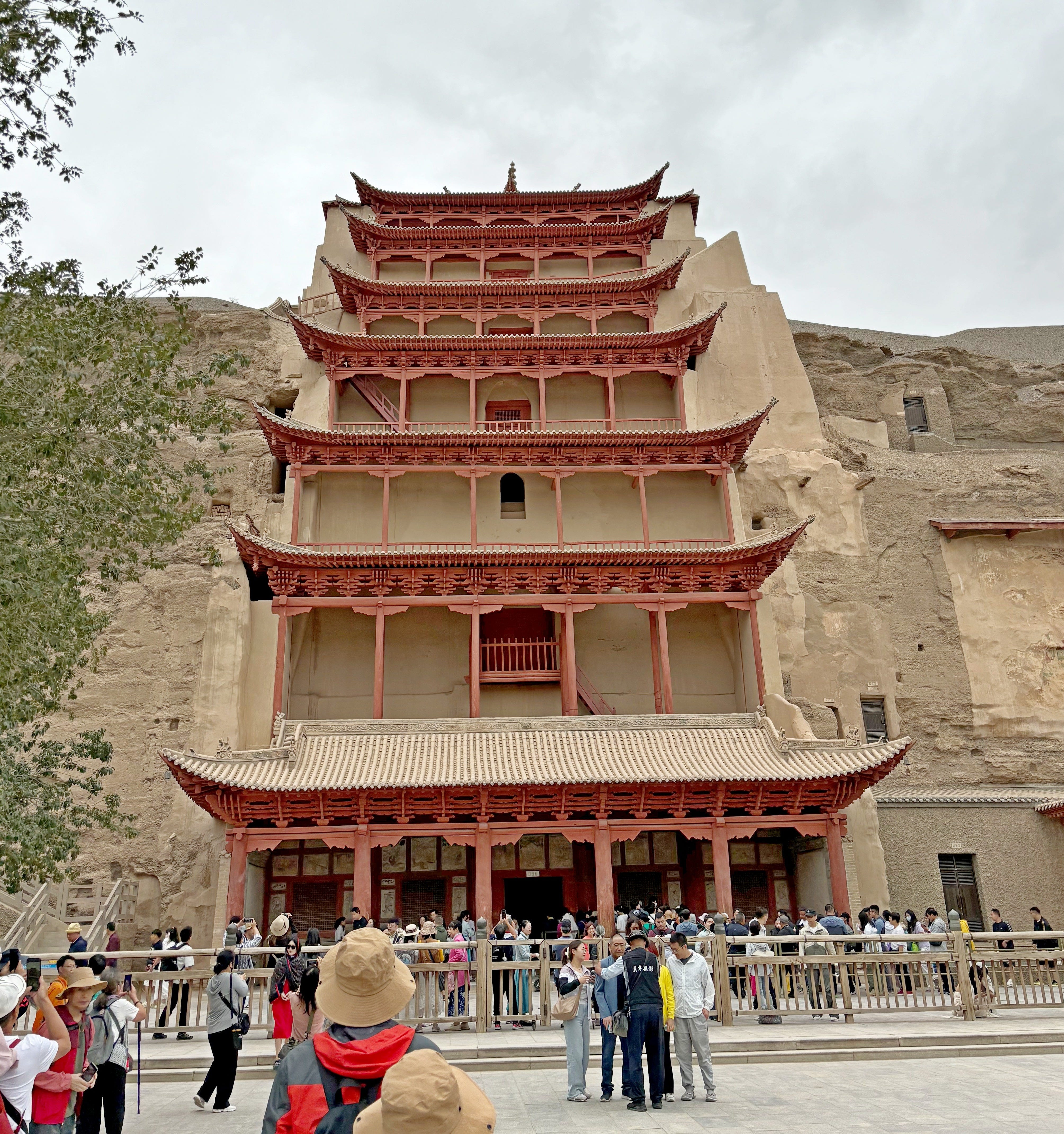
The monks have carved in soft stone the huge sculptures of Buddha akin to the much-suffering Buddhas of Bamiyan in Afghanistan (those that were blown by the Taliban, then rebuilt, and now threatened again).
Several empires occupied this monastic complex, each adding its flavour, until the Chinese empire withdrew from here and abandoned the city to the “barbarians.” The sand replaced scholars and gradually consumed the cave monasteries, leaving the place a forgotten ghost city.
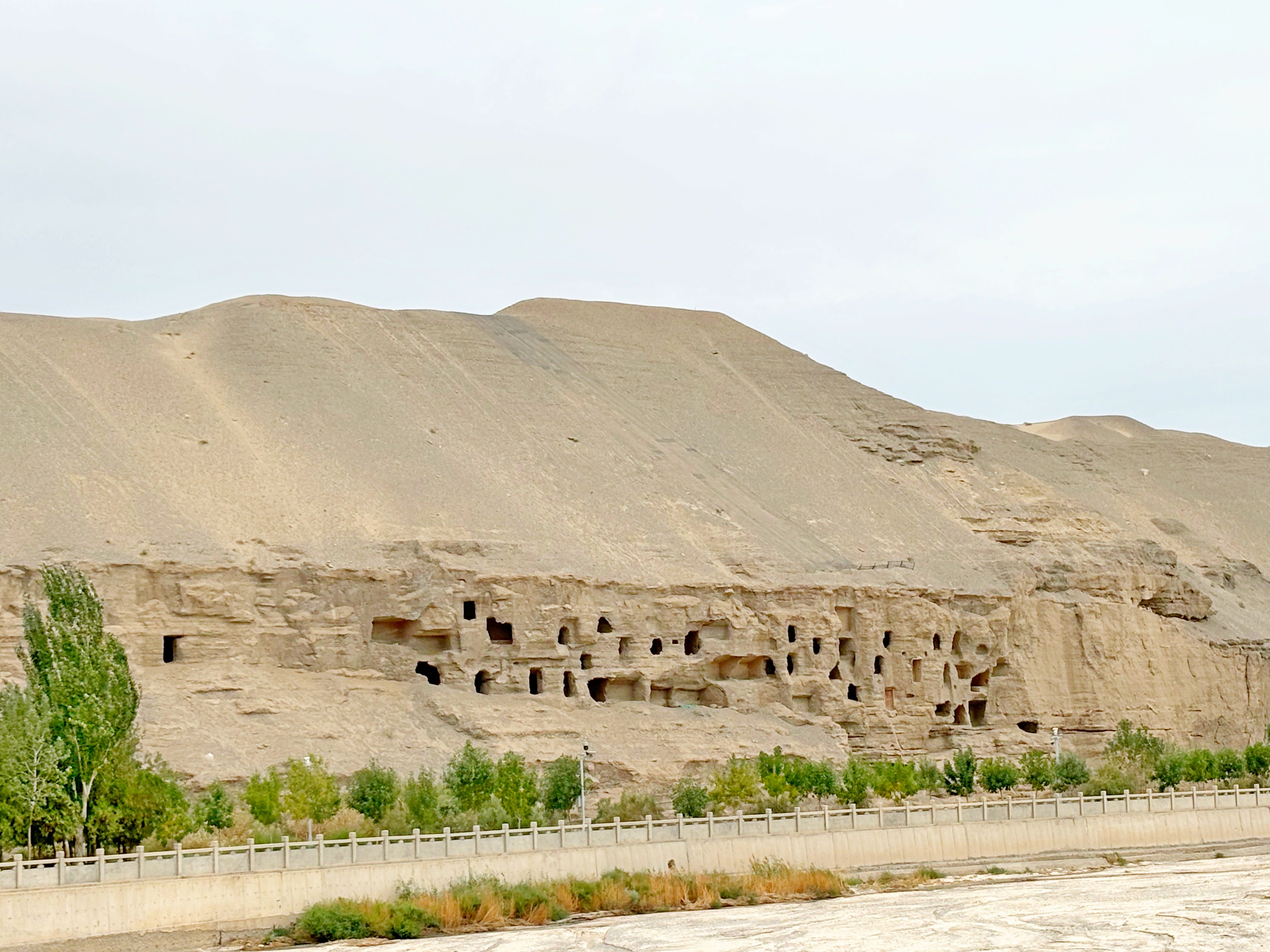
In the early 20th century, European, American, and Japanese adventurers-treasure-hunters-archeologists (sometimes one person covering all these roles) pursued the treasures of the monastic city. That was when the Diamond Sutra came to light.
Archaeologist Aurel Stein removed it (the Chinese say “stolen”) for the British Library, where it is now proudly displayed alongside another holy text: the much more famous but also “younger” Gutenberg Bible.
The discovery of the Sutra and the caves—equally unknown in China—caused a huge sensation in the West. The discovery was compared to the opening of the Tutankhamen tomb; the two events occurred around the same period and were followed with great public interest.
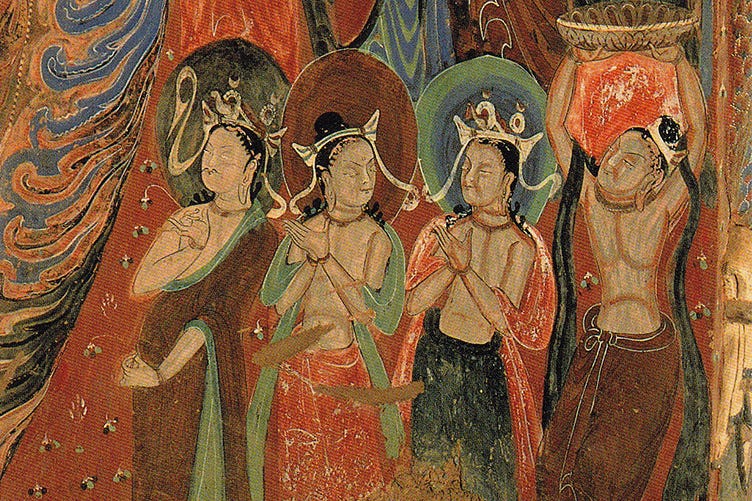
The explorers also removed numerous other manuscripts and art treasures from the caves, sometimes peeling paintings off the walls with chemical glue to carry them to Harvard, or cutting statues to take to Paris.
Now, they are hidden in the basements of world museums. So to study the early history of Tibet, one should go to the British Library or the National Library of France.
TOURISTS TAKE OVER
The Mogao Caves are now a major tourist site on the Silk Road, but ticket issuance is limited to 6,000 per day. Demand among young Chinese is huge, and tickets sell out online instantaneously during the high season.
This number seems to be the limit that the place can take. Many caves with the best art are small, dark, and fragile, and can accommodate no more than 20 people at a time. However, purchasing a ticket without a Chinese ID, a phone number, and language skills seems to be the major challenge.
The challenges of a visitor would not end at the ticket office, though. Like with many Chinese historical places, the official story told here is far from complete. It is more of a puzzle that a visitor should rebuild.
Too many episodes are simply omitted: the stories of the creation and abandonment of the place, 20th-century treasure-seeking with its fierce competition, the treachery of locals and authorities, and the fighting and disappointment that filled this place are largely left unexplained.
DUNHUANG THEATRE
I remain puzzled by the monastic city: why exactly did it flourish and fall into oblivion? Why did the Chinese occupy it in the first place, then abandon it to the Tibetans, then occupy it again, then abandon it again, forgetting everything they—and many others—created here? Wars, climate change, disasters, movement of people?
I seek answers in a theater—another newly built structure housing a show about the history of the cave city.
The show’s entertainment component is truly impressive. A few minutes in, I already feel that if it were premiered in London or Berlin, everyone would be talking about it. Instead, the talk of the Dunhang shows stays in Dunhuang.
The show is soldout, but the audience does not stay in one place. Everyone must move between rooms, stages, and decorations, as if travelling from one immersive epoch-space into another.
This constant movement brings changes to the decoration and style of the show parts. The first few minutes feel more like a small craft play focused on ordinary folks’ tales. By the end of the play, the show becomes a grand Olympic Games opening, with flags and national pride filling the air (one of the show’s directors was apparently also responsible for the Beijing 2008 Olympics opening ceremony).
The public is guided through replicas of the caves. Religious art comes to life and figures from wall paintings suddenly dance—each playing their own role, sometimes referring to pictures created 1,700 years ago and still on the cave walls.
Moving stage mechanics raise dozens of actors above it. There is no chance to breathe out—so much is going on—water and sand are spread on actors, dancing, music, the digital installations of huge scale are introduced almost continuously.
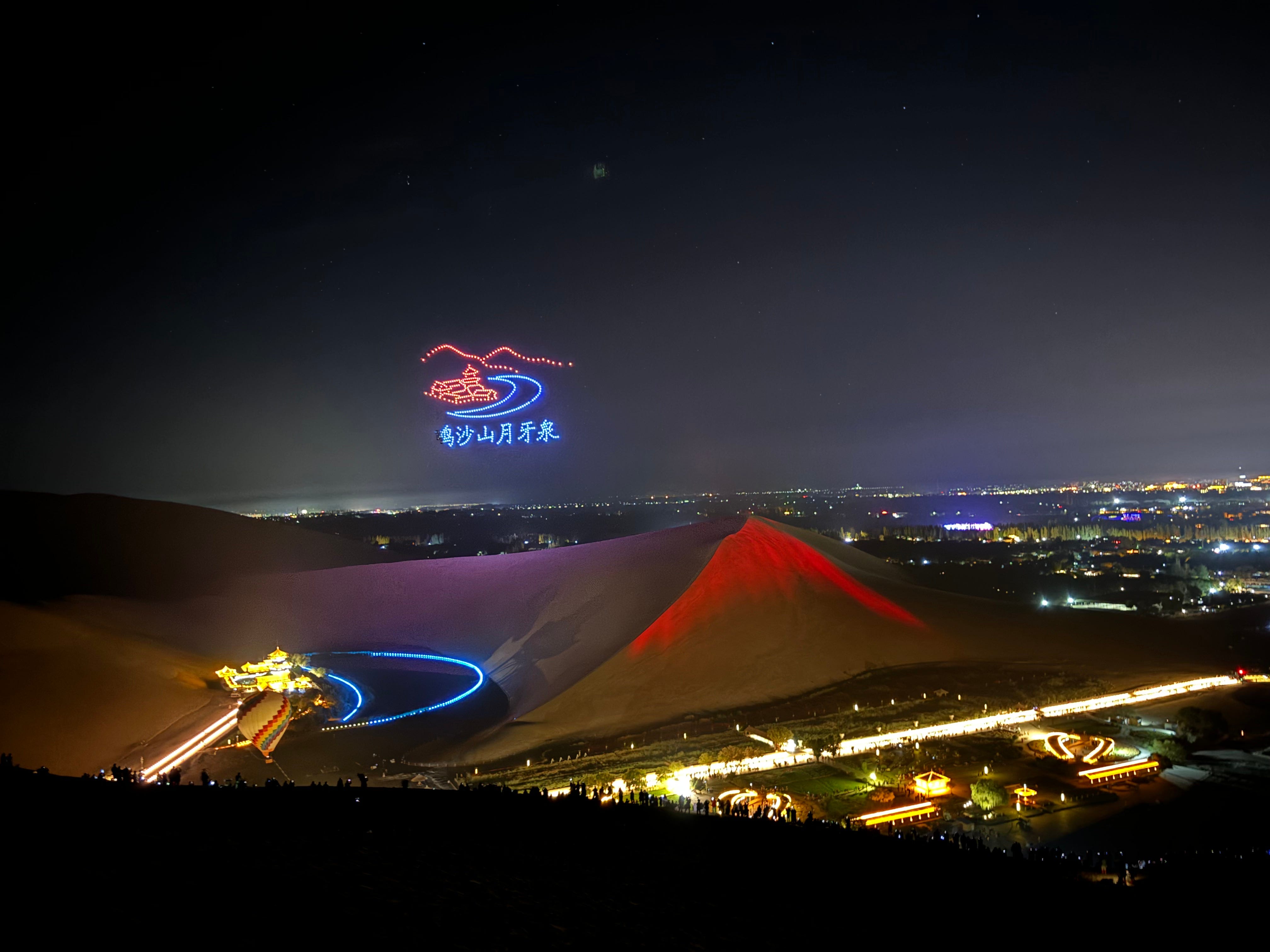
Just like with the storyline in the monastic cave city, the show’s story lacks a line and an ending. The only thing that seems to link all the pieces together in the story is the desert and its sand. There is so much to the Chinese Dunhuang—a crossroads in the middle of dashing emptiness, so rich in memories, still largely untold.
See the full Along the Silk Road Journey: