
Silk Road Journey: Map | China’s Wild West: Zhangye | Happy Underground Life: Jiayuguan | Library at the End of the World: Dunhuang
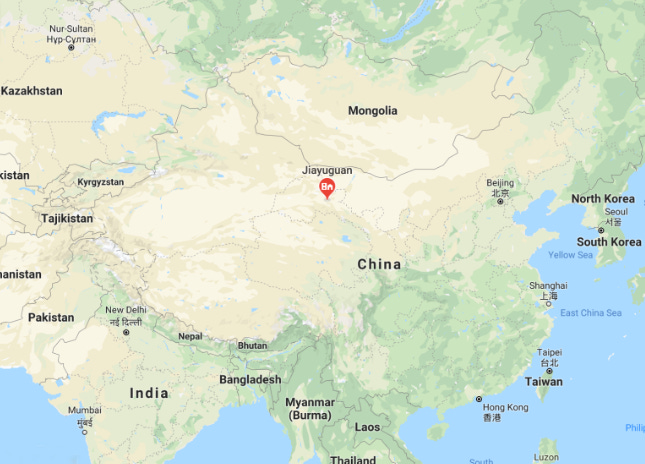
Jiayuguan (pronounced jaa·yoo·gwaan) is a popular stop on the Silk Road tourist route in China. The city hosts the westernmost gate in the Great Wall, the Empire’s final outpost. The Chinese like to recite verses about these areas where “no old friends to be found,” a sentiment that hangs heavily over this fortress.
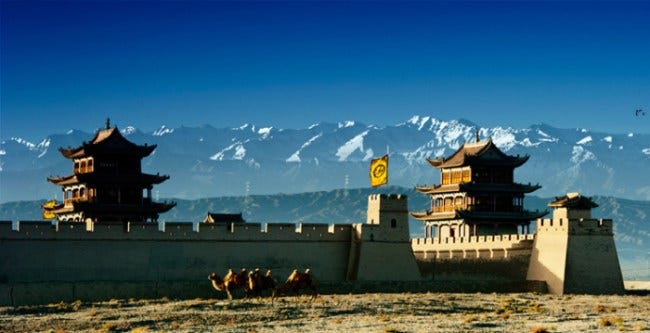
The Great Wall here feels quite new, though authentic, and is definitely less crowded than its more famous, million-visitor-per-day stretch near Beijing.
Despite the public image, historians believe the Great Wall was never a single entity, an endless fortification line. It was more of a system of towers and other fortifications designed to spot intruders and signal the danger down the line.
The Architecture of Paranoia
I happily climb the Wall and proceed to the hill range just outside of it. These hills mark the start of something mysterious and feared, a border between the “civilised world of the Middle Kingdom” and the land of the multiple tribes of “horse-riding barbarians” inhabiting the steppes and deserts beyond and outside the Wall. It was they whom the original builders of the Wall hoped not to see in their cherished Kingdom.
People like building walls to separate themselves from the outside world. Contemporary walls in Palestine, on the US-Mexico or Belarus-EU borders are similar barriers made by humans who pursue illusory escape from the “dangerous barbarians” dreaming of intruding on their peaceful existence.
The good news, as this piece of the Wall reminds, is that these barriers are eventually overcome. What remains of the Great Wall in Jiayuguan is merely 750 meters of renovated mud-brick sections.
The Chinese state has a habit of rebuilding its history to open it to the masses, often scrubbing away the authenticity in the process. Yet, without this rebuilding and simplification, these mud walls might have simply dissolved back into the desert.
Happy People of a Lost Civilisation
I feel like the great masses of tourists pursue me wherever I go. On TripAdvisor, I find an obscure description of an acropolis of thousands of tombs, an "Underground Art Gallery." I hope there were not too many tourists underground.
The taxi drops off at the empty parking. I can spot no other visitors in the vicinity. This is success—the Great Masses of Chinese Tourists are finally left behind!
Only one ancient underground chamber located in the desert about a mile from the ticket gate is open to visitors, which partially explains the absence of tourists. So the guard needs to unlock the chamber. He shows me down a staircase.
Steps lead me into the darkness. Inside, I see walls covered with hundreds of images assembled in blocks, a bit like a cartoon book. The images show lots of happy dudes feasting, parting, or just wandering around.
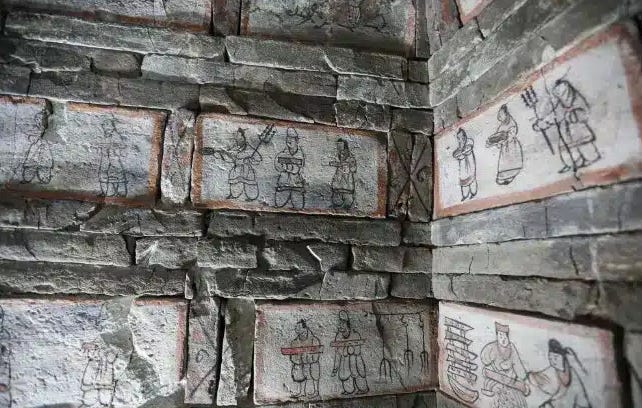
From a few explanatory notes, I learn that the Chinese call these happy people Northern Wei, proto-Turkish tribes who had what looks like a very good time just about the moments when Rome was collapsing in faraway Europe.
Northern Wei is a mysterious lost civilisation. Little is known about it. But these fields of tombs show their power.
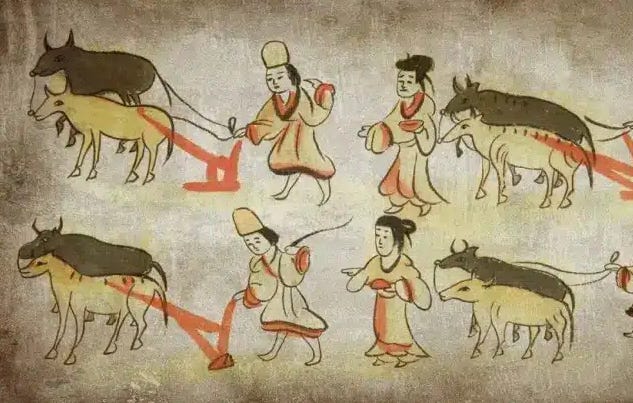
These Central Asian contemporaries of the Romans easily look like the happiest societies possible—not a single image of conflict, trouble, or struggle.
However, the underground city of the happy people appears to be as mysterious as it is unpopular with Chinese tourists. Will the story of the Wei people ever be uncovered? If so, will it make them popular like the Great Wall?
While I am reflecting on the questions, deep beneath the desert, the feasting ghosts of a forgotten kingdom seem to mock the paranoid emperors who built their great walls just a few meters above.
See the full Along the Silk Road Journey: