
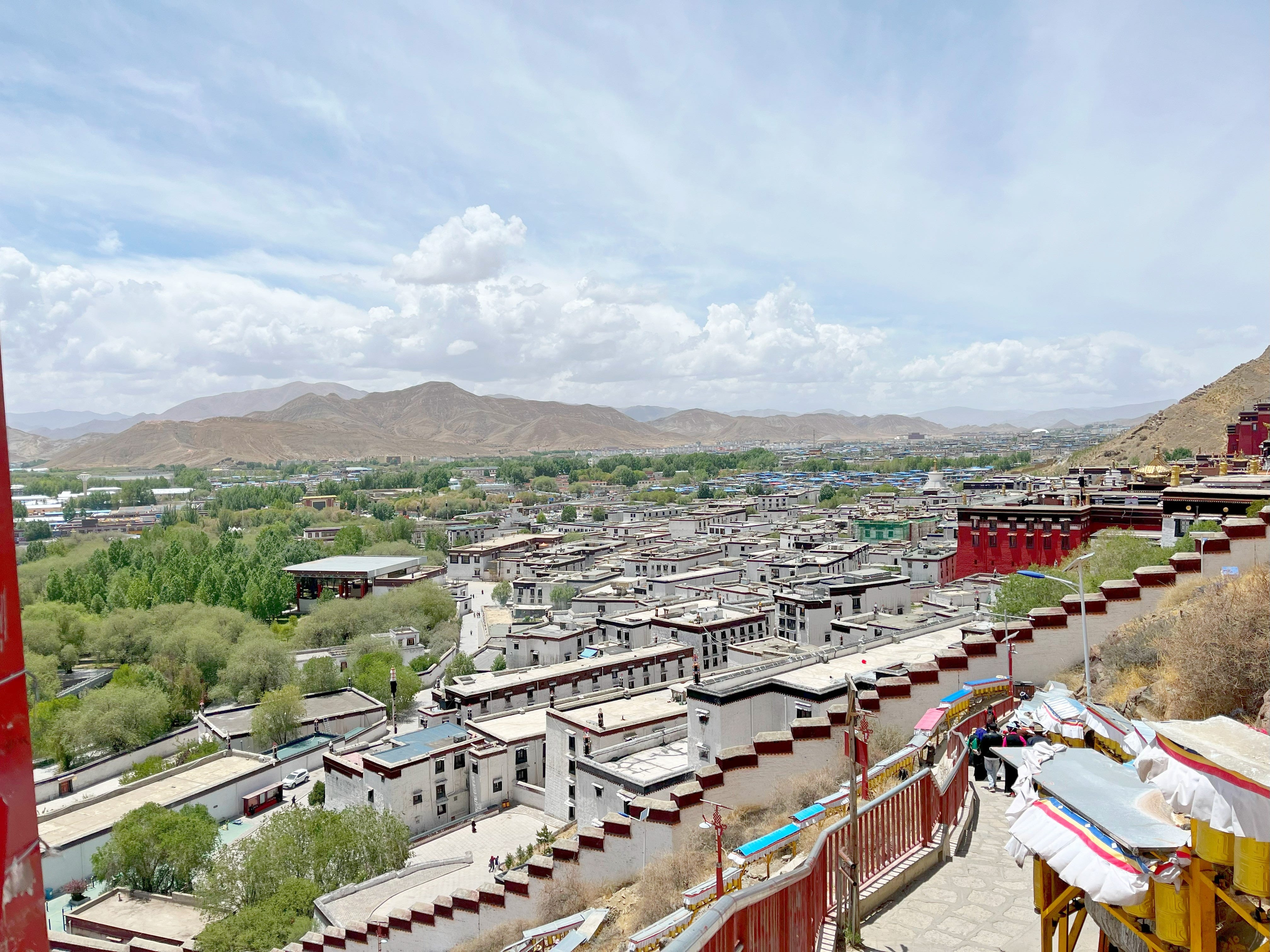
In 2024, I went to Tibet on a tourist journey - the only legal way to get to this place available to the absolute majority of non-Chinese nationals.1 But my Tibet journey started much earlier, in 2008.
Then, a friend wrote to me:
‘Here, look at this website. It’s called Facebook. You should join it; great political things are going on there.’
Then, Facebook was only about one year old, and I was most enthusiastic about all things political. So I joined.
The ‘political things’ on this future social media giant (Facebook became public just a few months prior) my friend has mentioned turned out to be an international solidarity campaign, the first of its kind, with protests happening in regions of the world many people have not even heard about.
The name of the region was Tibet, one of the most isolated and remote provinces of authoritarian China. The campaign resonated with another thing I was highly enthusiastic about – all kinds of anti-government political rebellions, uprisings and protests.
Through this campaign, I could witness the power of social media in harnessing people's solidarity. It was not just me, but many millions of users became aware of the tragedy of Tibet, as monks were publicly burning themselves in protest on Tibetan squares.
Many similar events followed in a few years. The Arab Spring preceded the Occupy movement, the Euromaidan, and many more large protest movements and campaigns on social media supporting them. I eventually wrote a doctoral dissertation in London on the topic of protests supported and organised through social media like Facebook.
The uprising in Tibet has lost, and ordinary Tibetans perhaps hardly noticed that Facebook campaign. Despite this, Tibet remained for me linked to this great power of the internet – the power to connect people and communicate changes.
These stories are based on a talk I gave in 2024 in Oxford about my travel to Tibet:
Next: What I’ve seen in Tibet:
I’ve also written a more practical travel-focused account for those interested in going to Tibet:
The structure of this blog is inspired by Lobsang Sangay and his lecture ‘The Four Nobel Truths of Tibet’ that the head of the Tibetan government in exile read at the European Humanities University in Vilnius in 2013. The title refers to one of the central concepts in Buddhism, the Four Noble Truths that describe “the nature of reality” and “the truth of the universe.”