
My lips are dry, my skin is red from sunburn that I failed to prevent despite taking the usual measures. My breath is frequent, but my steps are slow. Walking 30 meters up the stairs feels similar to running several miles.
The trip quickly makes me more and more exhausted despite luxury apartments and constantly available comfortable transportation and food. This is all different from what I expected physically. These physical difficulties remind me about the unique environment of Tibet.
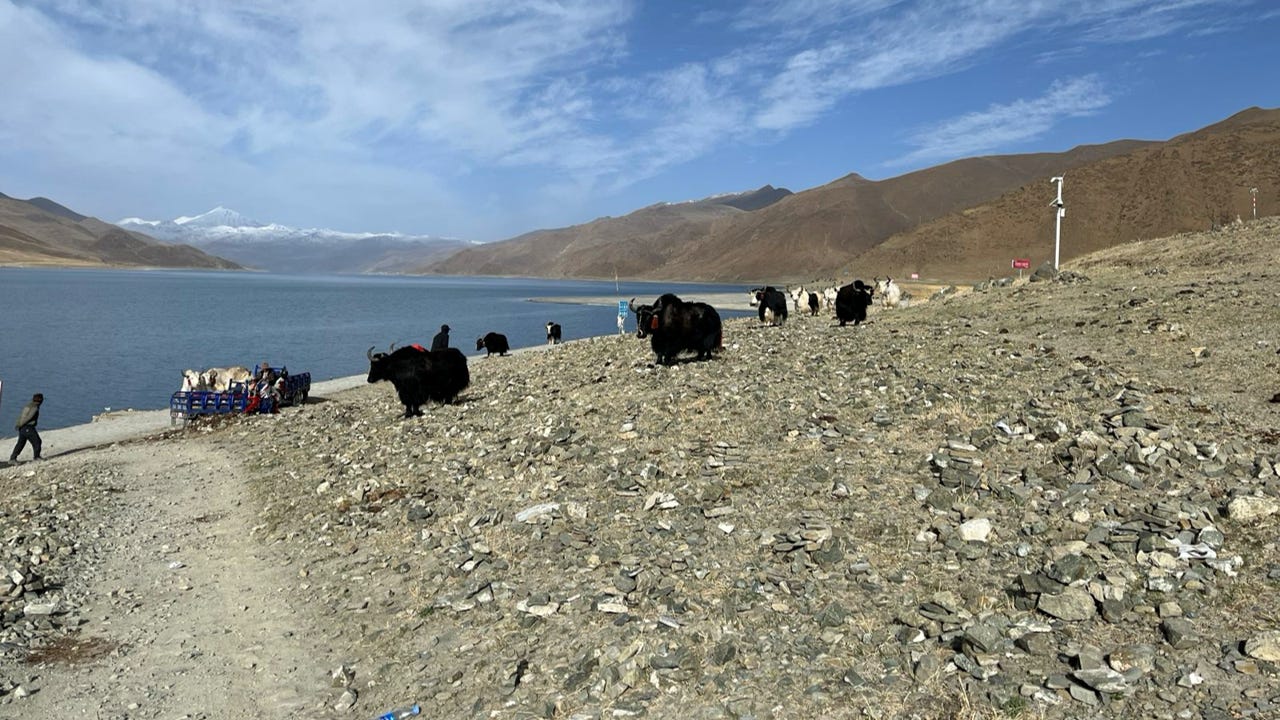
It is a place of huge tough mountains but also a land of multiple fertile valleys, as green in spring as any great reach agricultural area. This greenness features yaks (they should be kept above 3,000 meters to make them happy), a unique highland variety of barley and farming architecture, telling a story of a unique society that has been maintaining a harmonious relationship with nature.
Yaks, huge buffalo-like but extremely peacefully looking domesticated beasts, exemplify this harmony. One yak was enough to provide a family with lots of things for the whole year.
Yak’s milk is used for a great source of Tibetan endurance: buttered tea and palatable and sustaining tsampa.
Beyond the source of milk and meat, yak’s dried dung is still the source of fuel in many areas. Their hair and skin are the main material for traditional nomadic tents (some Tibetan people are still nomads), while yak butter is even used as a lubricant.
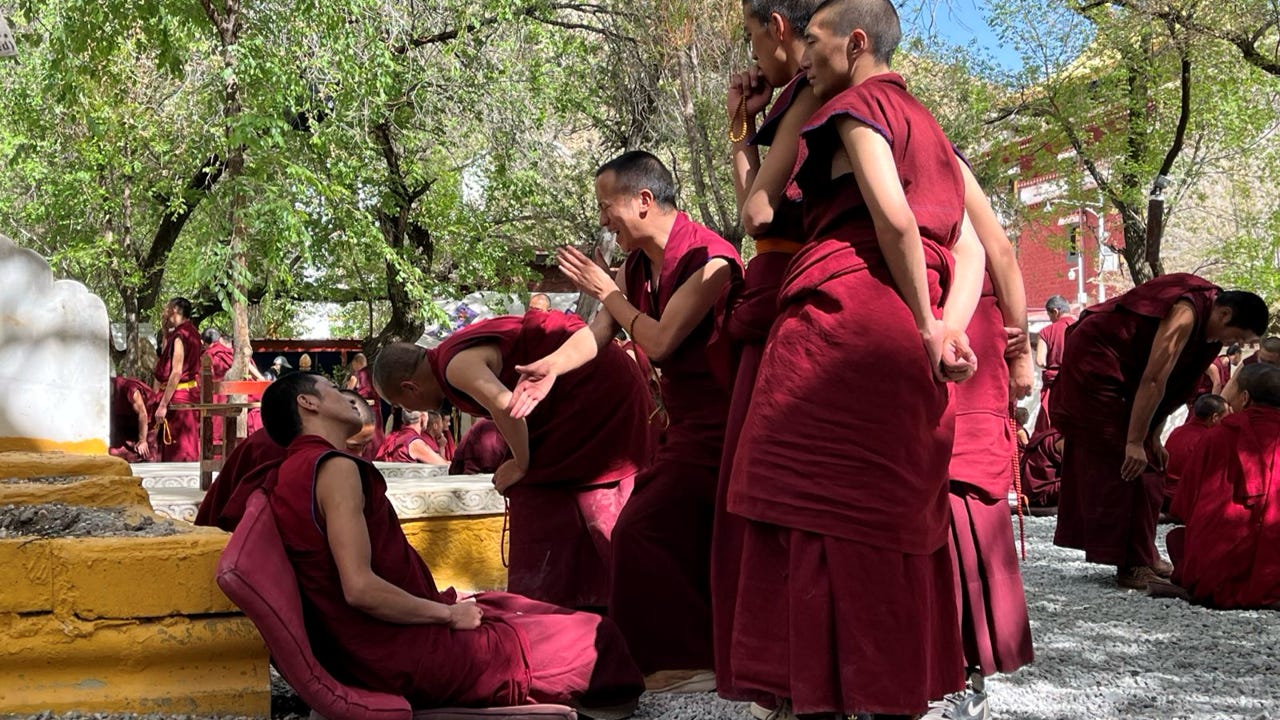
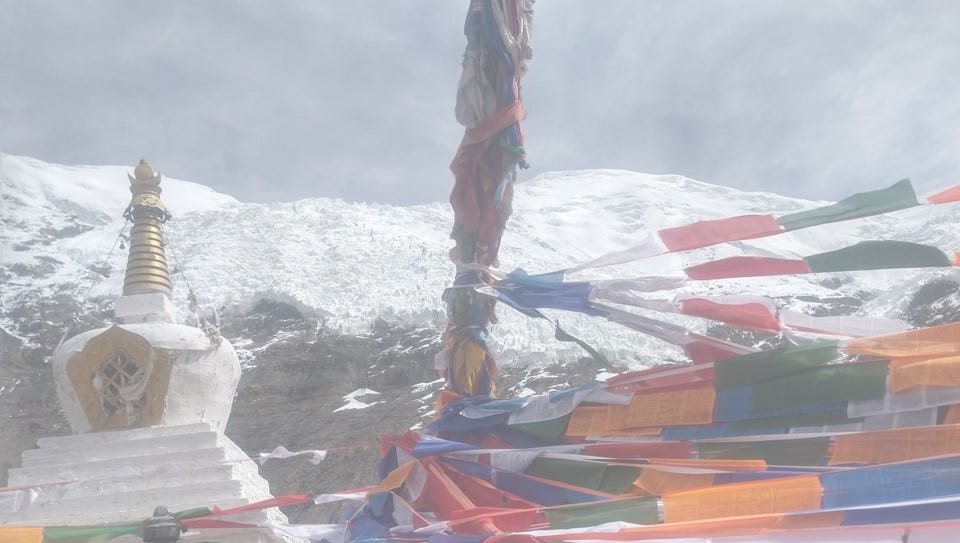
This harmony is seen everywhere: in religious practices with colourful Buddhist flags adoring mountain passes and peaks, making the view even more spectacular; in the tradition of religious pilgrimage that can take Tibetans on month-long journeys on foot on their tuberous terrains; in traditional dressing styles that are so well adapted to the life in this land of perpetual cold, and the respectful attitude towards nature and animals.
As any creature might be your grandma, who knows?
PS Escape
‘We were born, and we will die. No one will be able to escape it. Only what we do during our lifetime will be taken into account. It saddens me when I realize that things are not as good as one would like to see in Tibet. But I have the ability to influence history,’ wrote Lobsang Sangay, the head of the Tibetan government in exile in 2013.
The more we experience Tibetan culture, the more interested we become in the history of this place. My travel companion reads history pages on the Chinese Wikipedia till late at night, discovering complicated relationships between the Chinese empire and Tibet. After a while, she concludes:
‘So the Chinese emperor paid Tibet for more than 40 years, so Tibetans won't attack China again. This is not equal relationships!’
What Else I’ve seen in Tibet: