
The main reason I was so fascinated by that uprising solidarity campaign on Facebook in 2008 was the similarity between the situation in Tibet and the fate of еру country where I was born.
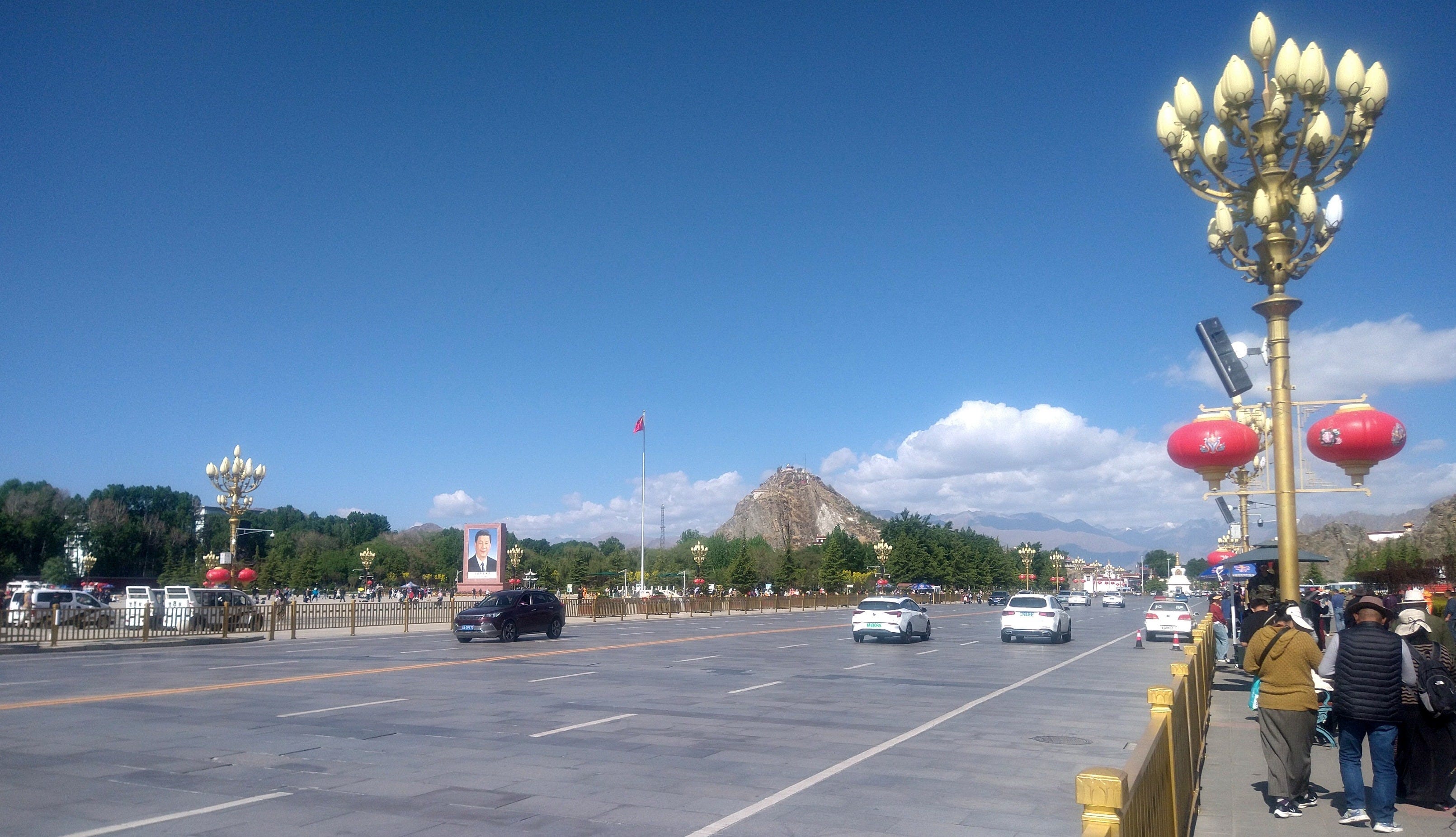
Just like Russia in Belarus, China ruthlessly asserts its presence in Tibet, disregarding the local culture and people as secondary to the Chinese. Chinese symbols such as official red flags are everywhere, even on the planes of the Tibetan Plateau, away from any inhabited places - just like the still-official Stalin era-designed flags are reasserted with almost maniac stubbornness in Belarus.
Chinese tourists recite propaganda stories about a foreign resident, Dalai Lama, inciting violence in China. Belarus state TV is full of similar stories, explaining anti-Lukashenka protests as foreign leader intrusion.
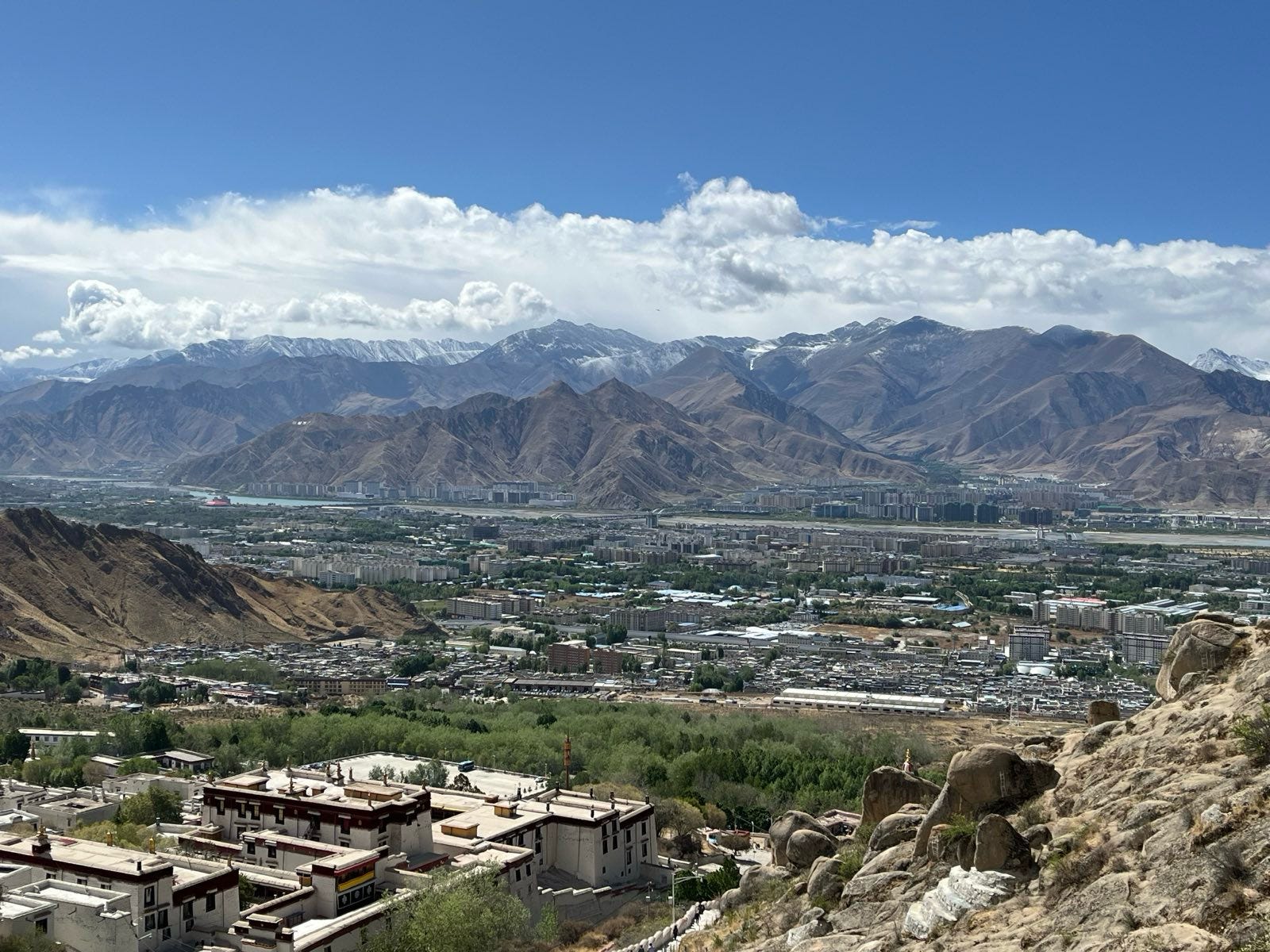
Hardly could I imagine finding Lhasa so similar to Minsk. Historical heritage seemed to be bulldozed here systematically and replaced with a cheap Chinese replica of the lost past. The replica is here to imitate lost architecture and cultural experience in a convenient, concrete-induced way.
Large boulevards, just like in the Stalin-era conceived centre of Minsk, link districts where multi-store buildings dominate. Chinese brands are advertised in Chinese, relying on Chinese-looking models. Lhasa hardly looks like what travellers might have encountered when they came here 70 years ago.
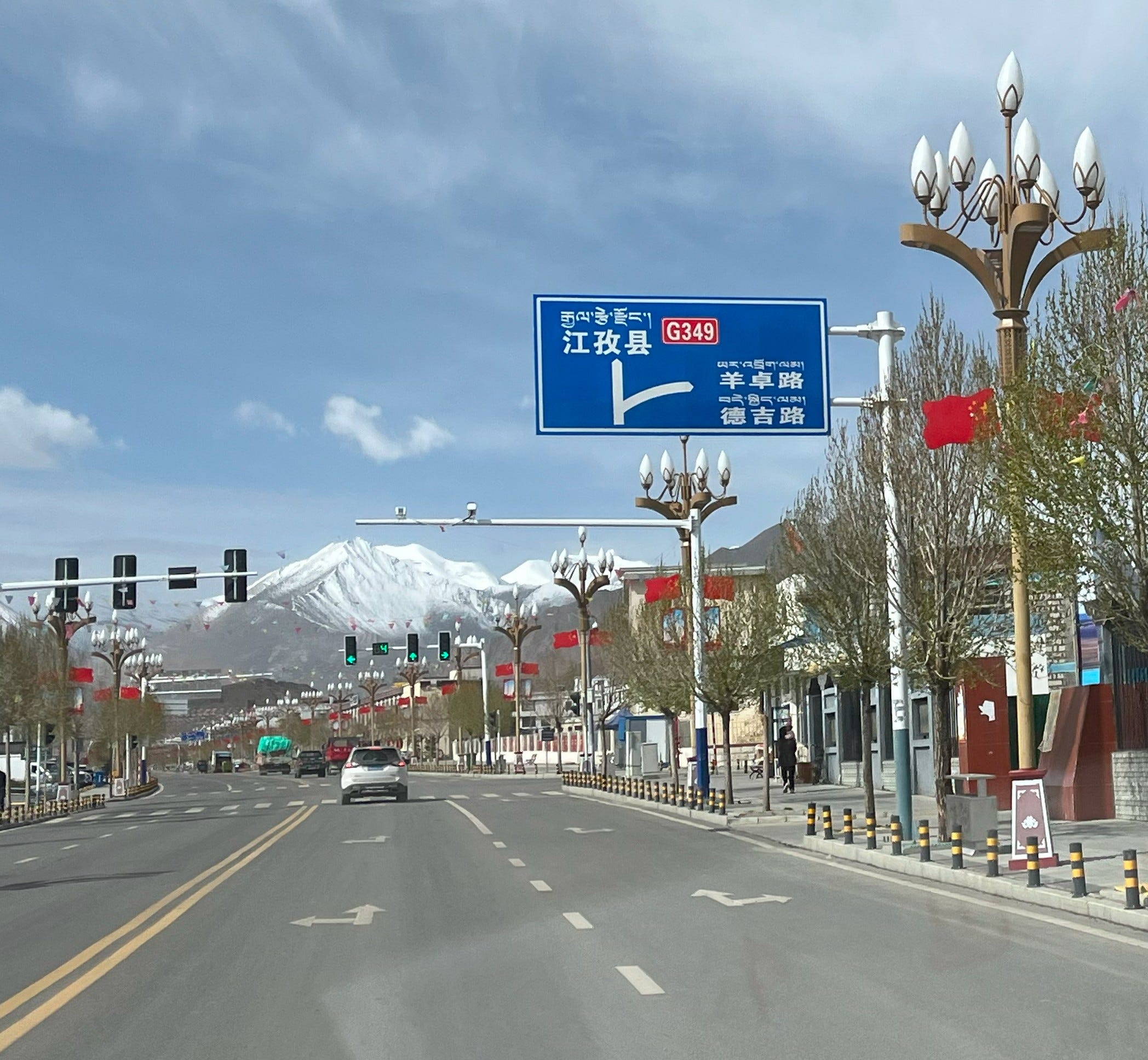
The fate of the national language in Tibet was remarkably relevant to the experience of Belarusians. The Tibetan language felt to be second-rated in Tibet, just like most Tibetan natives on the fast new railway are de facto subjected to second-rate sitting options through their economic inequality.
Similarly to Belarus, the native language is barely used to communicate any official information. Chinese and its people also dominate businesses. Schools are exclusively Chinese-speaking, as I understand, and Tibetan is learnt as essentially a foreign language. Though most Tibetans still use Tibetans for everyday communication, it seems.
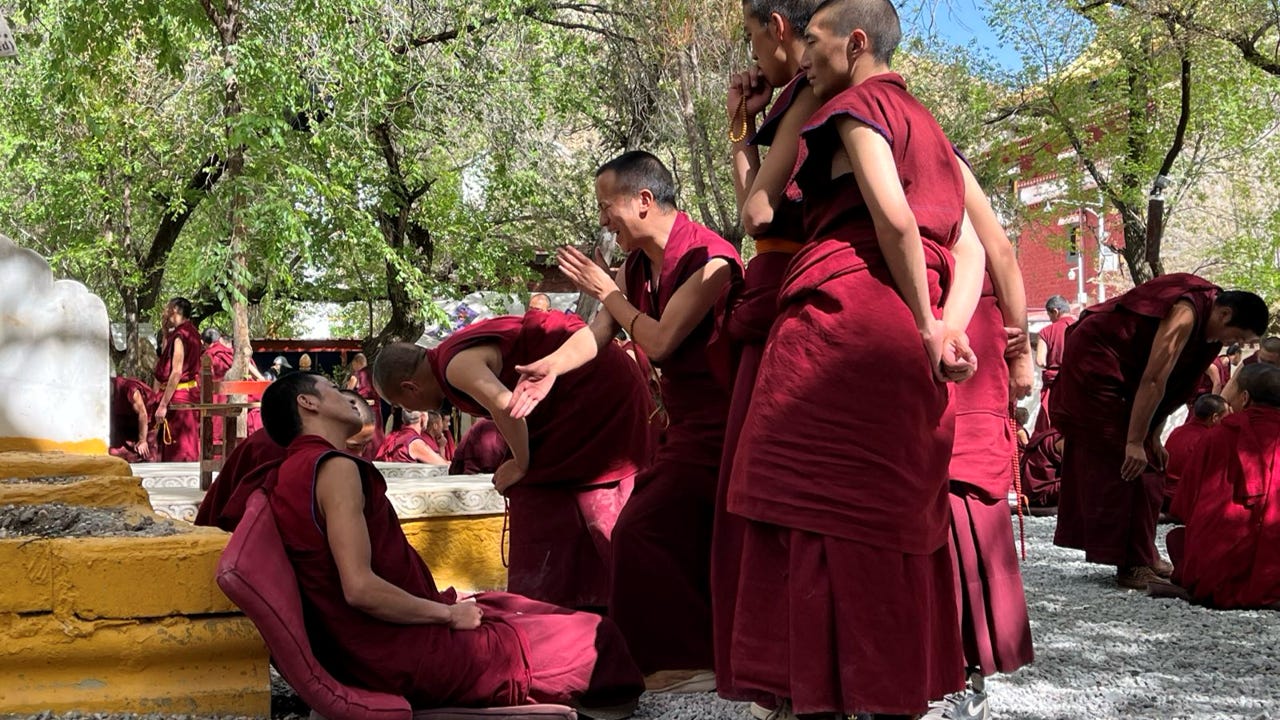
What is exactly on people's minds is hard for me to grasp. Though it's clear people here dream of the same as most humans across the world: something bigger, more, secure, maybe funnier, depending perhaps on the period of their lives.
The Chinese narrative is about the ‘liberation of Tibet’ from oppressive Feudalism and near-slavery conditions imposed by the rich theocracy of Dalai Lama in the 1950s and 60s. The narrative is hardly convincing now: why should this liberation be so synonymous with assimilation or even genocide? In 1960, the International Commission of Jurists, an organisation that later to receive a Nobel Peace Prize, concluded that the Chinese were guilty of genocide ‘by the widespread killing of Bigghist monks and lamas.’
I ask three Tibetan-looking boys who are about to finish school – they came to a temple in a remote location to ‘pray for good exams’ – about their national identity. They tell me they are ‘Chinese and Tibetan.’ They speak Tibetan with each other, but compulsory education has made them bilingual, both in terms of language and ideationally.
Despite Chinese schooling, clandestine subversion is even persistent in this remote location: one of the boys is a user of Twitter – a network banned almost from its very inception and especially hardly accessible from Tibet (my work VPN, which works everywhere, breaks in this region of Tibet).
The first thing the guide shows us is perhaps the most famous Lhasa building, the Potala Palace, which used to be part castle, part temple, and part royal residence.
Before going to the palace, the guide tells us that the current Dalai Lama, the spiritual leader of Tibetans, is in India. It is a ‘political’ issue, and ‘we do not talk about it.’ Tourists in our group showed their understanding with a short ‘yep.’
I liked that the guide used the word 'political' rather than toothless 'sensitive,' a term that is more spread in the Chinese English discourse. Though another guide we meet is much more politically illusive. They would talk about British troops that destroyed a castle a century ago but would fail to mention that a much more culturally important nearby monastery was almost totally ruined by the Red Guards during the Chinese Cultural Revolution.
From the palace grounds and windows, one could see a huge portrait of the current rulers of Tibet and China, Xi Jinping. This view reminds me of the old black-and-white pictures of Stalin on the central squares of the Soviet Union I have seen in old documentaries.
Dalai Lama’s portraits are hard to find in Tibet. Chinese authorities relentlessly police any display of this image. One Western author told the story of a tourist book being taken away from her in the airport, as it contained the prohibited image.
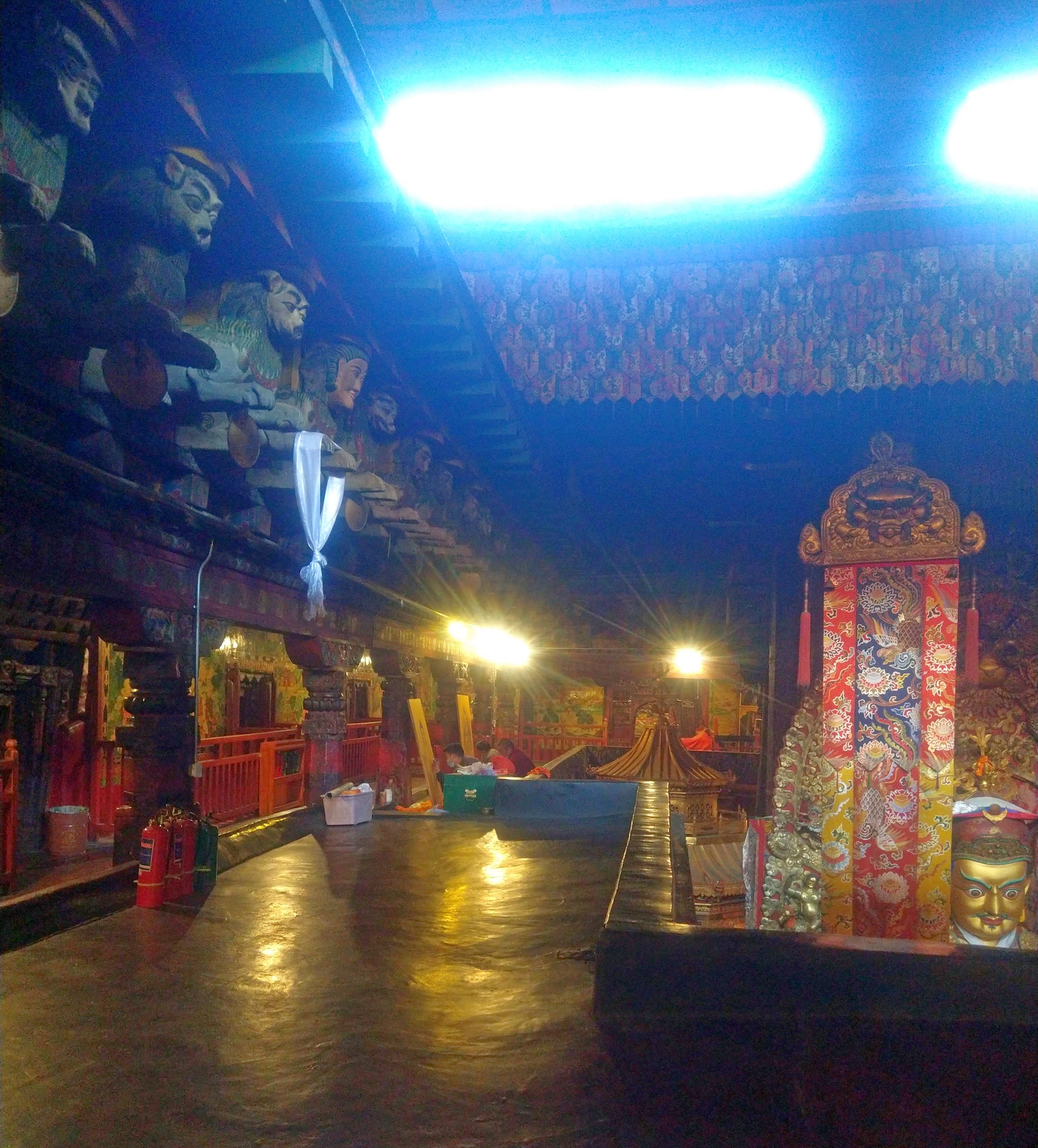
The palace has about 1,600 rooms, and we visit around 20 of them. Most impressive are the private headquarters of the current Dalai Lama, where he lived as a teenager in the 1940s and 50s. It is a tiny, corridor-like long room with a shrine and a balcony. The balcony had the optic equipment he famously used to observe the town from a telescope.
When I notice his old telescope, I turn a bit emotional as I feel I get close to something personal about this figure about whom I read and heard so much.
Another local talks about ‘military and guns everywhere’ in the city. While they were saying it, two huge jeeps and armed uniformed men were passing by. Then I noticed that the palace was surrounded by the Chinese military, as if at any moment a rebellion or attack may happen.
That is perhaps why, when looking at Tibetan people, I struggled to give the right term to describe what I saw: was it apartheid? Colonisation?
Next: The Third Truth. Time is Shrinking
Read other parts of my story of travelling into Tibet: