
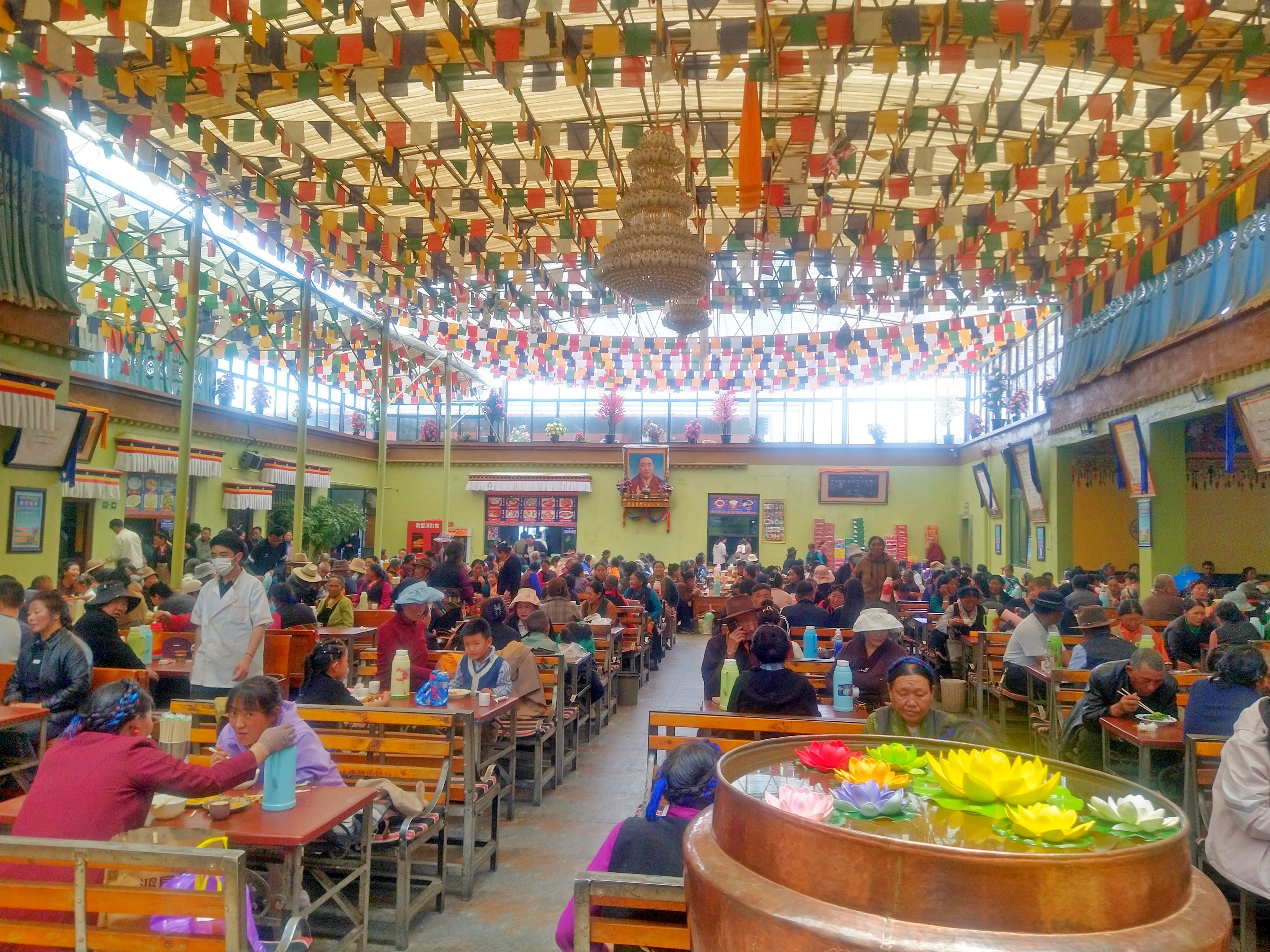
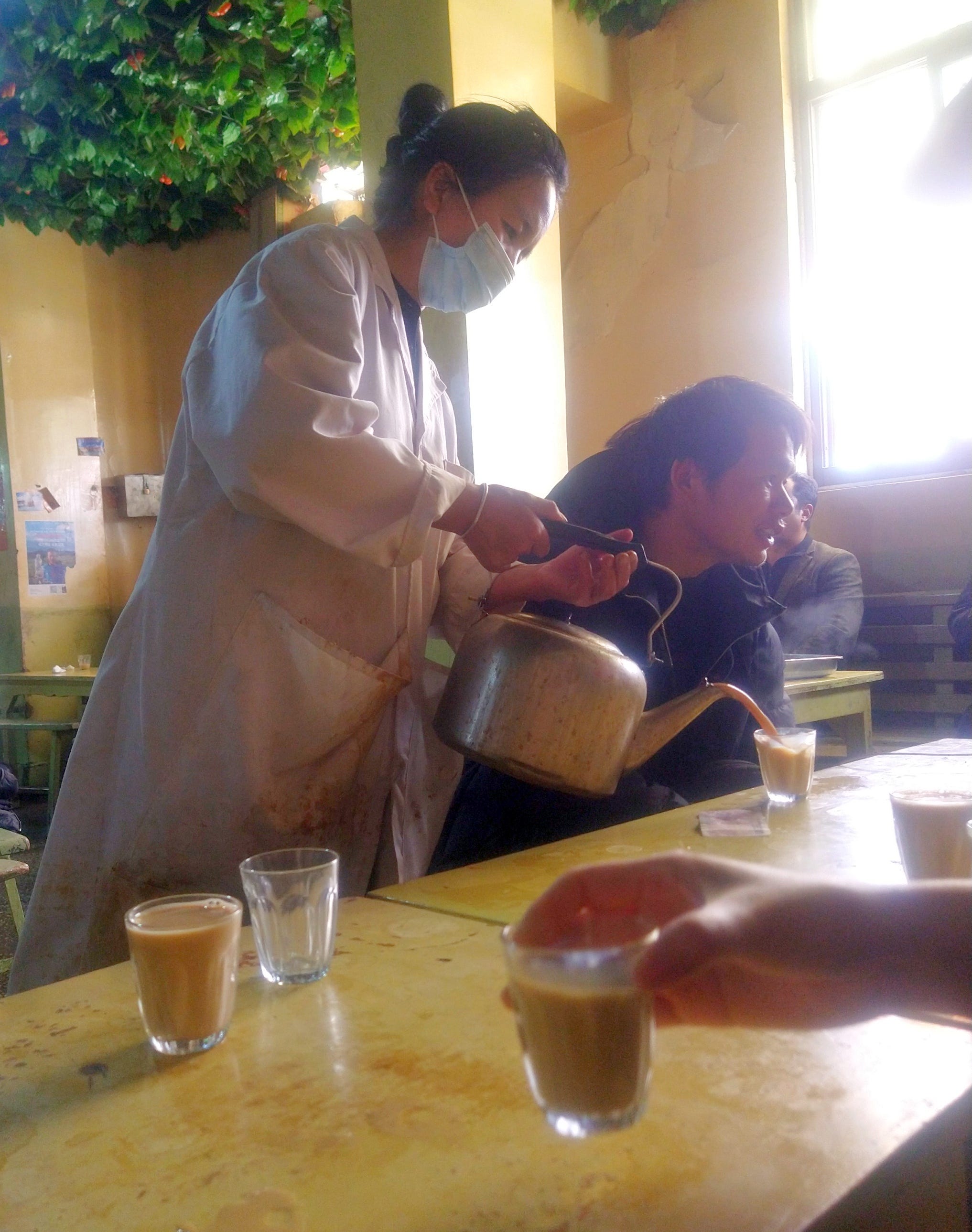
The further one gets away from Lhasa, the greater the feeling that one travels in time. In the provincial city of Gyantse, an important trade junction, we enter a ‘tea house’: a small cafe with a space for only four tables. It contains a stove, a shelf that seems to have been produced around the 1930s, and a couple of elderly gentlemen vigorously finishing their yak stew and yak butter tea, for which they paid around 1 dollar.
The smells, looks, sounds of this place and the street around it are hard to replicate. I imagine myself in my grandfather’s village house built in the 1940s in Central Belarus. Pictures can't do much to translate this atmosphere.
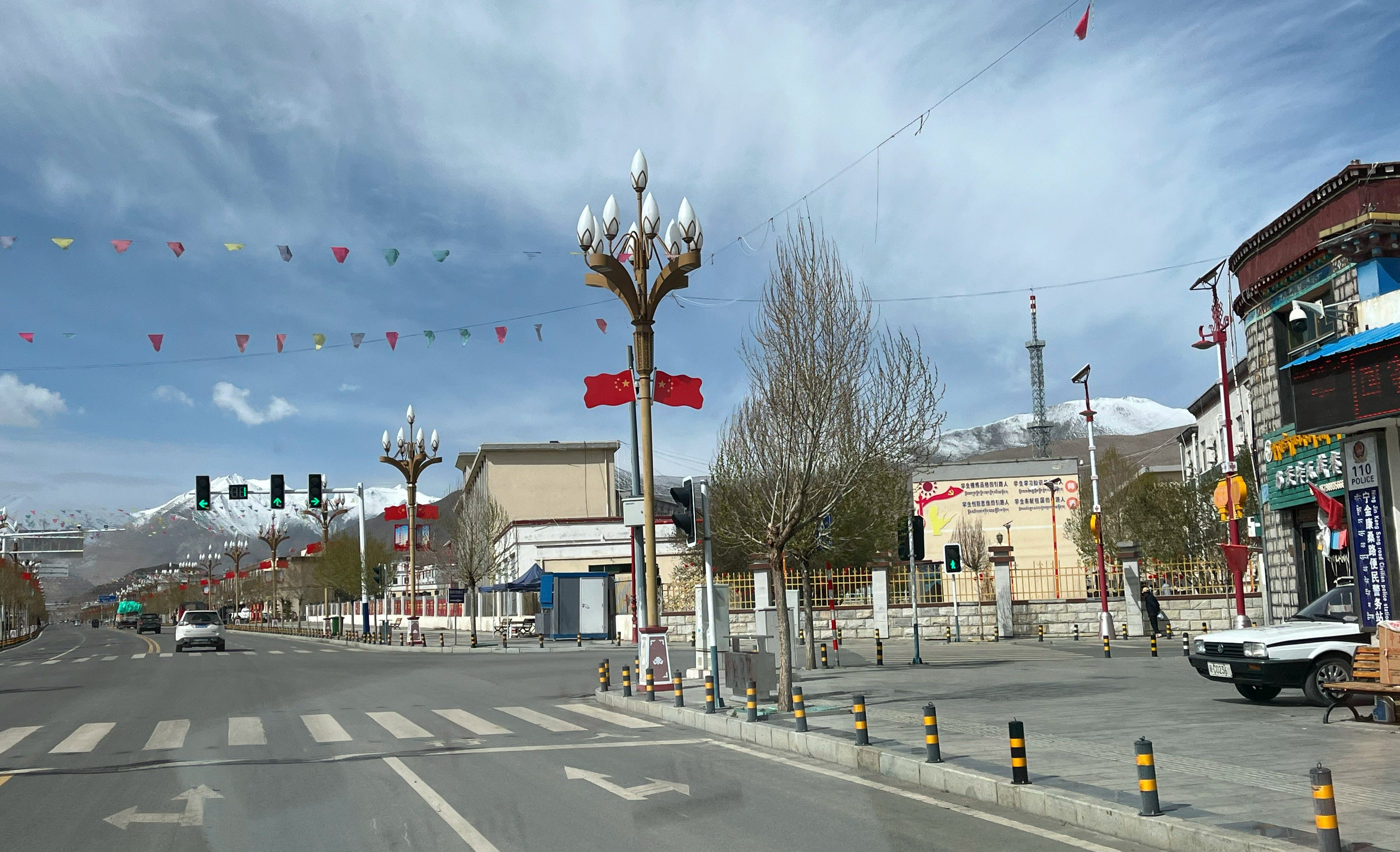
I know this is likely to change very soon. The cafe street is going through rapid redevelopment; traditional housing is being replaced with boring concrete buildings, cars replace yaks, and high-speed highways replace dirt roads.
The Chinese government provides loans for house rebuilding, so almost every village we pass is now a contraction site: the government builds an infrastructure while people rebuild their homes. Concrete replaces traditional structures, rivers get embodied in the concrete too, while perfect roads and railways are ready to bring in more goods and machines migrants. Time is shrinking here, just like almost everywhere, and some version of globalisation has caught up, even in Tibet.
In the second largest city of Tibet, we talk about these changes with a 40-something local who finished at Lhasa University in the ‘90s. That's where he learned English, which ‘was popular back then.’
He is very enthusiastic about Buddhism, though becoming a monk seems to be a challenge for him: ‘I would not be able to follow all the rules.’ Buddhism is not prohibited any more, as it was 50 years ago following the invasion of the Chinese Army. Though many monasteries were left in ruins, and former strongholds of anti-Chinese feeling, like the great Sera monastery, are now tourist attractions.
The local is critical of the state of the Tibetan language: ‘Young people prefer Chinese, Tibetan is useless’. Young people, apparently, seek stable and secure jobs, which are hard to find if one speaks Tibetan. ‘Tibetan is only needed in monasteries.’ This is still a rather large sector but not big enough to employ too many people.
So, young people are thinking of leaving for mainland China. That is in contrast to the millions of recent Chinese migrants who came to Tibet. The latter often see an ‘opportunity’ on this plateau being redeveloped on the Chinese government's terms.
Next: Tibet. The Fourth Truth. Happiness and Environment
Read other parts of my story of travelling into Tibet: